Plain-English reference
Sterile processing glossary: 84 terms organized by the work
Use the anchored sections to review essential language across the CRCST domains. Definitions are original summaries for study, not copied manual text or instructions for processing a device.
Reviewed against the linked official sources:
At a glance
- Terms
- 84
- Organized by the work
- Study areas
- 7
- From microbiology to regulation
- Definitions
- Plain English
- Original study summaries, not device instructions
What microbiology and safety terms should a technician know?
Microbiology vocabulary explains why separation, cleaning, protective equipment, and controlled workflows matter. These short definitions describe concepts, not laboratory thresholds or clinical policy. In practice, use current facility procedures, exposure plans, product labels, and device instructions. When a word such as sterile or disinfected appears in a question, identify the required outcome before choosing a process.
- Bioburden
- The number and kinds of living microorganisms contaminating an item.
- Biofilm
- An attached microbial community protected by a self-produced matrix.
- Contamination
- The presence of unwanted microorganisms, soil, chemicals, or foreign material.
- Cross-contamination
- Transfer of contamination between people, surfaces, devices, or work areas.
- Microorganism
- A microscopic life form such as a bacterium, fungus, or protozoan.
- Pathogen
- A microorganism or agent capable of causing disease under suitable conditions.
- Spore
- A highly resistant bacterial form that can survive harsh conditions.
- Prion
- An abnormal protein agent requiring specific risk controls and instructions.
- Reservoir
- A place where an infectious agent normally lives or persists.
- Mode of transmission
- The route by which an infectious agent reaches another host.
- Standard Precautions
- Baseline infection-control practices applied according to anticipated exposure risk.
- Personal protective equipment
- Wearable barriers selected to reduce exposure to workplace hazards.
What decontamination and cleaning terms should you recognize?
Cleaning removes soil so later disinfection or sterilization can work as intended. The correct chemistry, water quality, time, temperature, mechanical action, device configuration, and rinsing come from current instructions and procedures. A visible-clean check is important but does not prove that every hidden surface is safe or that a required microbial outcome has been achieved.
- Decontamination
- Processing that makes an item safer to handle by removing or reducing hazards.
- Cleaning
- Removal of visible and invisible soil from a device or surface.
- Detergent
- A formulated cleaning agent that helps loosen and carry away soil.
- Enzymatic cleaner
- A cleaner containing enzymes selected to break down particular soils.
- Point-of-use treatment
- Initial bedside or procedure-area steps that prevent soil from drying.
- Manual cleaning
- Hands-on cleaning performed with approved tools, chemistry, and technique.
- Mechanical cleaning
- Cleaning performed by validated equipment such as a washer-disinfector.
- Ultrasonic cleaner
- Equipment using cavitation to help remove soil from compatible devices.
- Cavitation
- Formation and collapse of bubbles that creates cleaning action in solution.
- Water quality
- Chemical and microbial characteristics that can affect cleaning and equipment.
- Contact time
- The period a chemistry must remain under specified conditions to work.
- Cleaning verification
- A defined check used to assess whether cleaning met expectations.
What preparation and packaging terms appear in sterile processing?
Preparation and packaging protect device function and allow the chosen process to reach required surfaces. Inspection, assembly, count, lubrication, testing, and package selection depend on the device and system instructions. A neatly wrapped tray can still be wrong if an instrument is damaged, positioned incorrectly, missing, or incompatible with the cycle.
- Inspection · See close-up: Instrument serrations
- Deliberate examination for cleanliness, damage, alignment, and expected function.
- Assembly
- Rebuilding a device or set in its required configuration after cleaning.
- Instrument count sheet
- A controlled list used to assemble and account for set contents.
- Lumened device · See close-up: Lumen
- A device containing an internal channel that requires specific processing access.
- Hinged instrument · See close-up: Box lock · See close-up: Ratchet
- An instrument with a joint that must be accessible during processing.
- Instrument lubricant
- A compatible product applied as instructed to support device function.
- Packaging system · See close-up: Sterile barrier
- Materials or containers designed to maintain protection through processing and storage.
- Sterilization wrap · See close-up: Sterile barrier
- Porous packaging material used in an approved wrapping configuration.
- Rigid sterilization container
- A reusable container system with validated components and instructions.
- Peel pouch · See close-up: Package seal
- A sealable package for compatible items, opened by separating its sides.
- Internal chemical indicator
- A chemical process indicator placed inside a package according to applicable instructions to assess specified conditions at that location.
- Labeling
- Controlled identification of contents, load information, dates, and traceability details.
What sterilization and disinfection terms matter most?
Sterilization and disinfection are not interchangeable. The device classification, manufacturer instructions, compatible method, cycle parameters, load configuration, monitoring, and release policy determine what is appropriate. The definitions below help identify the concept, but they do not authorize a cycle or replace training on the exact equipment used by a facility.
- Sterilization
- A validated process intended to eliminate all viable microorganisms, including spores.
- High-level disinfection
- Eliminates microorganisms except potentially large numbers of bacterial spores.
- Low-level disinfection
- A process for appropriate surfaces that destroys selected microorganisms.
- Steam sterilization
- Sterilization using saturated steam under controlled time, temperature, and pressure.
- Low-temperature sterilization
- A compatible sterilization method used for heat-sensitive devices.
- Cycle parameter
- A measurable condition such as time, temperature, pressure, or concentration.
- Biological indicator
- A monitoring device containing resistant spores used to challenge a process.
- Chemical indicator
- A material that changes when exposed to one or more process conditions.
- Physical monitor
- The equipment record of cycle conditions such as time and temperature.
- Bowie-Dick test
- A specified test of air removal and steam penetration in certain sterilizers.
- Implant load
- A load containing a device intended to remain within a patient's body.
- Load release
- The documented decision that monitoring and required criteria support distribution.
What storage and distribution terms support package integrity?
A completed process can be undone by poor handling, moisture, damage, or uncontrolled storage. Event-related practice focuses on what happens to a package rather than relying only on a printed date. Facility policy and applicable instructions determine shelf organization, environmental limits, transport, inspection, and response to a compromised package.
- Sterile storage
- A controlled area for protecting processed packages before use.
- The principle that package integrity depends on events and handling conditions.
- Package integrity · See close-up: Package seal
- The intact condition needed for a package to maintain its barrier.
- Shelf life
- The defined period or condition under which an item remains acceptable.
- Stock rotation
- A system for using appropriate inventory in an organized sequence.
- First in, first out
- Distribution that generally uses older acceptable stock before newer stock.
- Case cart
- A cart organized to transport supplies for a scheduled procedure.
- Transport container
- A closed or controlled carrier used to move items safely.
- Environmental control
- Management of temperature, humidity, cleanliness, and traffic as required.
- Wet pack
- A package with unexpected moisture that requires handling under facility policy.
- Strike-through
- Movement of liquid through packaging that can compromise the barrier.
- Recall
- A controlled action to identify, contain, and evaluate affected processed items.
What quality assurance terms connect the full workflow?
Quality systems turn individual steps into a traceable process. Documentation should show what was done, by whom, with which equipment and load, and how exceptions were handled. Useful quality work looks for causes and system improvements instead of hiding near misses. Records must also follow privacy, security, retention, and correction requirements.
- Quality assurance
- Planned activities that provide confidence a process meets defined requirements.
- Quality control
- Operational checks used to detect whether specific output meets criteria.
- Traceability
- Ability to connect a device, load, process record, and destination.
- Lot control number
- An identifier linking packaged items to processing and monitoring records.
- Preventive maintenance
- Scheduled work intended to keep equipment operating as required.
- Calibration
- Comparison of a measurement system with a suitable reference under defined conditions to establish the relationship between their readings.
- Validation
- Documented evidence that a process consistently produces its intended result.
- Competency
- Demonstrated ability to perform a task correctly under defined conditions.
- Audit
- A structured review of records or practice against stated requirements.
- Nonconformity
- A condition in which a requirement was not met.
- Root cause analysis
- A method for identifying underlying contributors to an unwanted outcome.
- Corrective action
- A documented change intended to address a cause and prevent recurrence.
What professional and regulatory terms complete the picture?
Sterile processing technicians work within several layers of authority. Laws and regulations are mandatory governmental requirements; standards, guidelines, accreditation expectations, manufacturer instructions, and facility policies play different roles. When sources conflict or a device cannot be processed as written, stop and use the facility's escalation path rather than improvising.
- Instructions for use
- The manufacturer's current directions for safe device or product handling.
- Standard
- A consensus document describing agreed requirements or recommended practices.
- Guideline
- Evidence-informed recommendations that support decisions and policy development.
- Regulation
- A legally enforceable rule issued by an authorized government body.
- Accreditation
- External recognition that an organization meets a defined set of requirements.
- Policy
- An organization's approved statement directing decisions and responsibilities.
- Procedure
- The approved steps for carrying out a specific task within a facility.
- Safety data sheet
- Hazard, handling, first-aid, and protection information for a chemical.
- Chain of command
- The defined route for escalating questions, hazards, or unresolved decisions.
- Ethics
- Principles supporting honest, responsible, and patient-centered professional conduct.
- Continuing education
- Documented learning used to maintain and expand professional knowledge.
- CRCST
- HSPA's Certified Registered Central Service Technician credential designation.
What do instrument and packaging details look like?
Connect these six details with the definitions above. These simplified illustrations support recognition; the instructions for the exact device and packaging system guide actual processing.
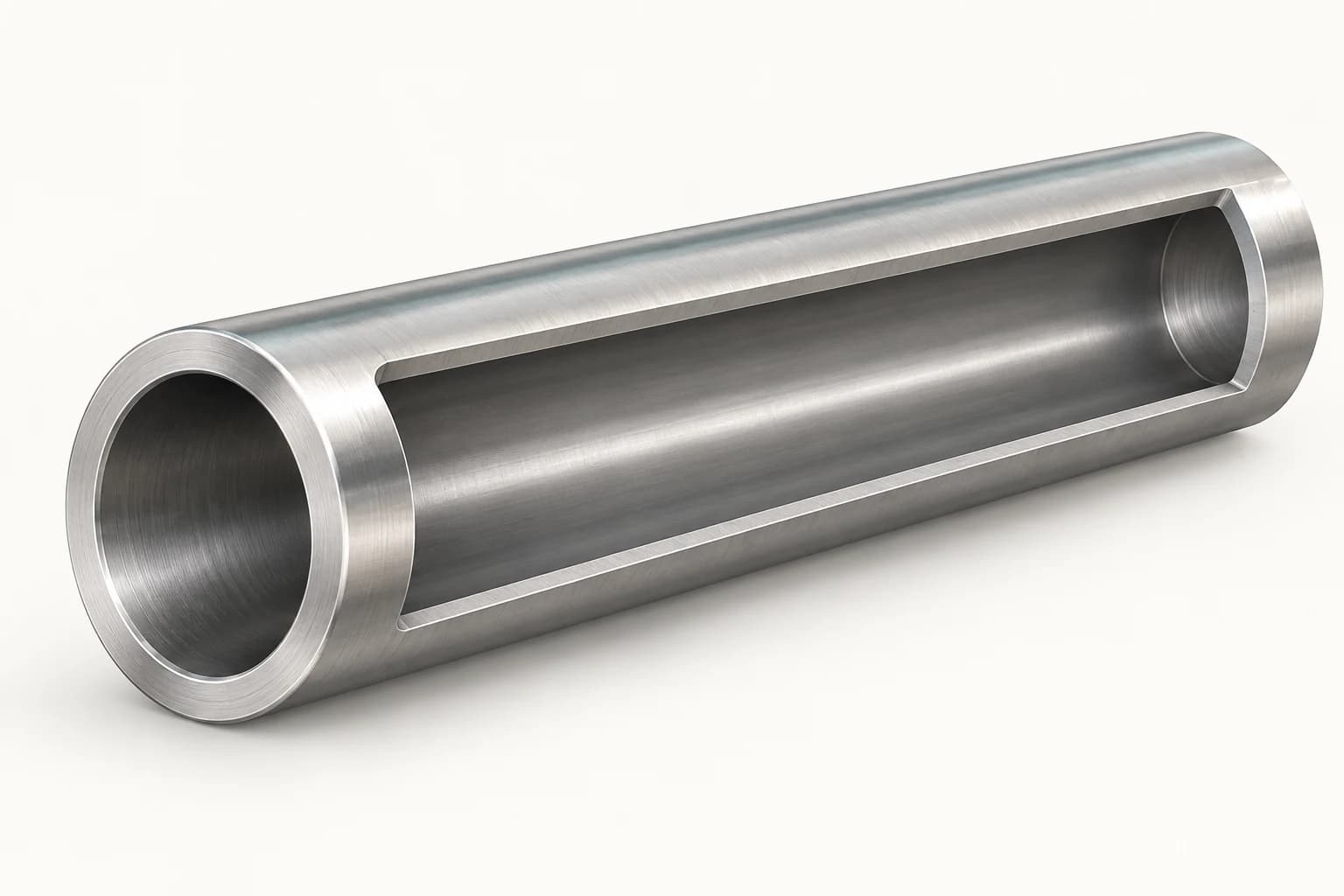
A lumen is an internal channel. A lumened device needs processing that reaches its internal surfaces, as specified by its instructions.
Terms: Lumened device
AI-generated study illustration · simplified detail

A box lock is a joint in which one instrument shank passes through the other. This close-up locates the joint; device instructions determine how to clean and inspect it.
Terms: Hinged instrument
AI-generated study illustration · simplified detail

A ratchet is the locking mechanism near the handles. Its interlocking teeth are distinct from the gripping serrations on the jaws.
Terms: Hinged instrument
AI-generated study illustration · simplified detail

The seal joins the pouch materials around the contents. Inspect according to the packaging instructions; this illustration shows its location, not proof of seal strength or sterility.
Terms: Peel pouch, Package integrity
AI-generated study illustration · simplified detail

A sterile barrier system helps protect processed contents from contamination. Its appearance alone cannot confirm sterility or replace the required integrity and release checks.
Terms: Packaging system, Sterilization wrap
AI-generated study illustration · simplified detail

Serrations are gripping ridges on an instrument's working surface. The spaces between them are areas to examine for residual material during inspection.
Terms: Inspection
AI-generated study illustration · simplified detail
Sterile processing glossary questions
What does CRCST mean?
CRCST means Certified Registered Central Service Technician, the introductory sterile processing credential administered by HSPA. CRCST Academy is an independent preparation site and does not issue the credential.
What is sterile processing?
Sterile processing is the controlled work of receiving, cleaning, inspecting, assembling, packaging, sterilizing or disinfecting, storing, and distributing reusable medical devices under current instructions and facility procedures.
Is this glossary a substitute for a device IFU?
No. These are short study definitions. The current manufacturer instructions for use, facility procedures, approved standards, and trained leadership control actual device processing.
How should I study sterile processing vocabulary?
Group terms by workflow, explain each one in your own words, connect it to a safe action, and compare your understanding with current official materials. Avoid memorizing a word without knowing when it changes a decision.
Does knowing these terms guarantee a CRCST pass?
No. Vocabulary supports comprehension, but the exam also tests application across seven domains. Use HSPA's current outline and original practice questions to plan broader study.
Continue your CRCST research
Use these guides together, then confirm application and credential rules with the organization that owns them.
Sources
Policies, fees, dates, and labor data can change. These primary sources control; CRCST Academy is an independent preparation site and is not affiliated with or endorsed by HSPA, CBSPD, Prometric, or the U.S. Bureau of Labor Statistics.
- HSPA — CRCST certification overview and exam content resourcesOfficial CRCST starting point for the current outline, credential scope, and candidate materials.
- CDC — disinfection and sterilization guidanceFederal infection-control guidance for cleaning, disinfection, sterilization, and related concepts.
- FDA — reprocessing reusable medical devicesFederal information on device reprocessing, manufacturer instructions, and health-care facility responsibilities.